Top 10 Sustainable Fashion Materials for Clothing Brands
The fashion industry generates 92 million tonnes of textile waste annually, with synthetic fabrics requiring over 200 years to decompose in landfills. As climate concerns intensify and consumers demand transparency, clothing brands face mounting pressure to transition away from conventional materials that harm both planet and people.

Sustainability is no longer an optional branding element but a measurable operational requirement across sourcing, production, and circularity models. The materials outlined here have been selected through an evidence-based framework that evaluates energy usage, water consumption, chemical footprint, recyclability, and end-of-life responsibility. By choosing better fibers today, brands can future-proof their collections while meeting the expectations of eco-aware customers.
What Makes a Fabric Truly Sustainable?
Before selecting the top materials, it is important to define the criteria that make a textile genuinely sustainable. Significant indicators include resource efficiency (water, energy, land), chemical management practices, greenhouse gas emissions, and waste circularity potential. Certifications such as GOTS, OEKO-TEX, FSC, Bluesign, and GRS also play a critical role in verifying the authenticity of sustainability claims.
A fabric’s sustainability is also determined by its entire lifecycle, from agricultural cultivation or raw-material extraction to production, transportation, use, and eventual disposal. Materials that are biodegradable or recyclable have a strong advantage, especially in markets preparing for Extended Producer Responsibility (EPR) regulations. These criteria ensure that brands are not only selecting eco-friendly inputs but are participating in long-term environmental stewardship.
Understanding these principles helps companies avoid greenwashing and make procurement choices grounded in scientific data and industry transparency. With this foundation, let us explore the top 10 sustainable fashion materials shaping the future of apparel production.
The Top 10 Sustainable Fashion Materials
1. Organic Cotton
Organic cotton is grown without synthetic pesticides, chemical fertilizers, or genetically modified seeds, making it significantly cleaner for the soil and environment. It uses about 90% less water in certain regions compared to conventional cotton while supporting healthier farming systems. When certified under GOTS, it ensures ethical labor standards and toxin-free production across the supply chain.
For clothing brands, organic cotton fabric offers a soft hand feel, strong breathability, and excellent printability without compromising consumer comfort. It is ideal for T-shirts, babywear, activewear, loungewear, and premium basics. Although slightly more expensive, the material’s transparency, global availability, and strong consumer recognition make it an accessible and reliable sustainable option.
2. Recycled Cotton
Recycled cotton is produced from post-industrial textile waste or post-consumer garments, making it one of the lowest-impact fibers available today. Its production requires significantly less water, energy, and chemicals than virgin cotton, helping brands drastically reduce textile waste. When certified under GRS (Global Recycled Standard), it ensures traceability and quality control in recycled sourcing.
The fiber can be blended with virgin cotton or other fibers to improve durability, making it suitable for denim, basics, and everyday apparel. With the rise of textile-to-textile recycling technologies, recycled cotton is becoming central to circular fashion. Brands that adopt this material can position themselves at the forefront of next-generation sustainable design.
3. Hemp
Hemp is one of the strongest, most resource-efficient natural fibers available and requires minimal water, pesticides, or land to cultivate. It absorbs CO₂ quickly, regenerates soil health, and produces high fiber yield per acre, making it a climate-positive crop. The durability and longevity of hemp fabrics also contribute to their sustainability since garments last much longer in use.
In apparel manufacturing, hemp blends well with cotton, bamboo, and Tencel, offering a soft texture that becomes more comfortable over time. It is ideal for shirts, trousers, outerwear, and accessories that require breathability and structural strength. Hemp’s growing popularity in luxury and streetwear collections demonstrates its market acceptance across diverse price points.
4. Linen (Flax Fiber)
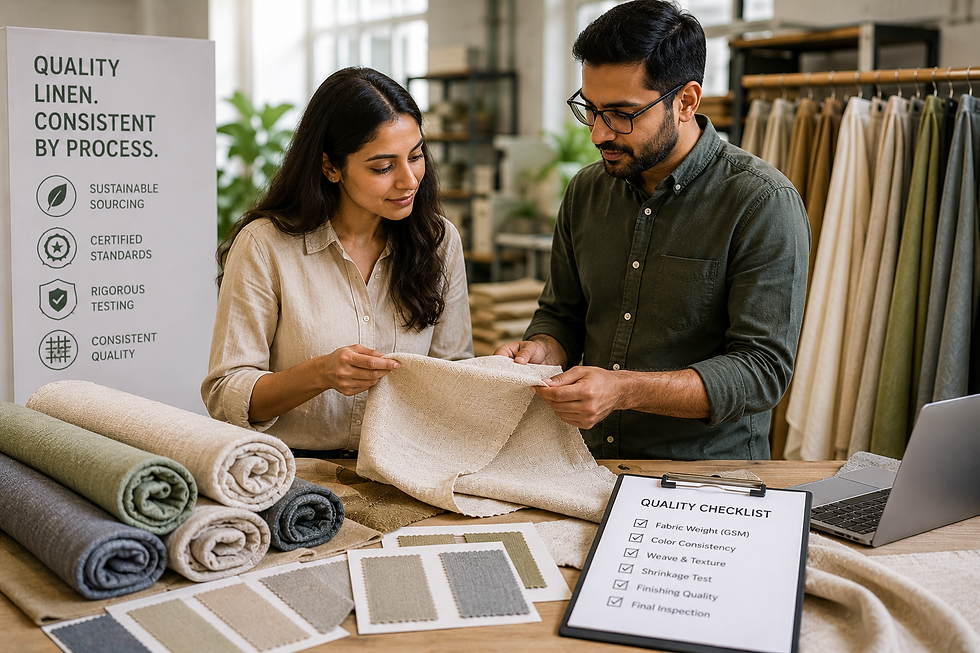
Linen is made from flax, a plant that thrives on rainwater, requires minimal chemical inputs, and grows even in poor-quality soil. Its agricultural footprint is among the lowest of all natural fibers, and it is fully biodegradable when undyed or naturally finished. Linen offers exceptional moisture-wicking properties, making it one of the best natural fabrics for warm climates.
The textile is valued for its luxurious texture, natural sheen, and high tensile strength, which allow garments to retain structure for years. It is widely used in resort wear, shirts, dresses, bedding, and premium lifestyle collections. As more brands shift toward regenerative natural fibers, linen remains one of the most commercially viable and eco-friendly choices.
5. Tencel (Lyocell)
Tencel, produced by Lenzing, is a regenerated cellulosic fiber manufactured using closed-loop technology that recycles 99% of solvents. Derived from FSC-certified wood pulp, it has a significantly lower environmental impact than viscose or modal produced through traditional chemical-intensive processes. Its softness, drape, and moisture-management capabilities make it ideal for modern, comfort-driven products.
The fiber blends easily with cotton, wool, silk, hemp, and recycled polyester, giving brands design flexibility across categories. Tencel’s biodegradability and chemical transparency have positioned it as a premium sustainable fabric trusted by global apparel manufacturers. It is particularly well-suited for activewear, dresses, innerwear, and performance-focused fashion.
6. Recycled Polyester (rPET)
Recycled polyester is made from post-consumer plastic bottles, industrial plastic waste, or discarded polyester garments. It reduces energy usage by up to 45% and lowers CO₂ emissions when compared to virgin polyester production. Although still a synthetic fiber, rPET helps divert millions of tons of plastic waste from landfills and oceans.
The material retains the durability, stretch, and quick-dry properties of conventional polyester, making it ideal for sportswear, outerwear, and fashion basics. Certifications like GRS ensure the authenticity of recycled content and responsible processing practices. When used thoughtfully, rPET supports circularity models and reduces reliance on fossil fuel-derived fibers.
7. Recycled Nylon (Econyl & Others)
Recycled nylon is created using recovered fishing nets, industrial plastic, and post-consumer nylon waste. Econyl, the most recognized brand, uses advanced regeneration technology to convert waste into high-performance nylon that can be recycled repeatedly. This drastically cuts environmental impact while offering performance equal to virgin nylon.
For apparel brands, recycled nylon is widely used in swimwear, activewear, lingerie, and outerwear because of its elasticity and strength. It resists abrasion and provides excellent shape retention, making it suitable for high-movement applications. As circular fashion accelerates, recycled nylon will continue to replace virgin synthetics in premium garment lines.
8. Bamboo Lyocell (Not Bamboo Viscose)
Bamboo lyocell is a sustainable alternative to traditional bamboo viscose, which often involves toxic chemicals and high water consumption. Produced through a closed-loop solvent recovery process, bamboo lyocell is cleaner, safer, and significantly more eco-friendly. It is also naturally hypoallergenic, breathable, and thermoregulating, making it ideal for comfort-oriented apparel.
The fabric feels smooth like silk yet remains durable enough for daily wear. It is used in loungewear, baby clothing, innerwear, premium basics, and bedding due to its skin-friendly properties. Brands should ensure certification and transparency from suppliers to avoid viscose-based greenwashing claims.
9. Piñatex (Pineapple Leaf Fiber)
Piñatex is an innovative textile made from agricultural waste, specifically pineapple leaf fibers that are typically discarded after harvest. The material reduces environmental pressure by utilizing an existing waste stream without requiring additional land, water, or chemicals. It provides an ethical, vegan-friendly alternative to leather with a dramatically lower carbon footprint.
Brands use Piñatex in footwear, bags, accessories, and outerwear due to its structural strength and unique texture. While not yet as soft as animal leather, technological advancements continue to improve its flexibility and finish. As demand for plant-based leather alternatives grows, Piñatex offers strong commercial and sustainability advantages.
10. Mycelium Leather (Fungi-Based Material)
Mycelium leather is a next-generation biomaterial manufactured from fungal root structures grown in controlled environments. It requires minimal water, land, or chemical input and can be produced within days, making it far more resource-efficient than traditional leather. Because it can be engineered for thickness, texture, and flexibility, mycelium offers a highly versatile design platform.
The material is biodegradable, lightweight, and increasingly comparable to premium leather in terms of performance and aesthetics. Leading biotechnology companies are scaling production for handbags, footwear, outerwear, and luxury accessories. As brands seek low-impact leather alternatives, mycelium materials are emerging as one of the most technologically promising solutions on the market.
Comparison of Top 10 Sustainable Fashion Materials
Material | Sustainability Impact | Key Benefits | Limitations / Considerations | Certification | Best For (Apparel Categories) |
|---|---|---|---|---|---|
Organic Cotton | Grown without synthetic chemicals; reduced water use in certain regions; healthier soils | Soft, breathable, widely recognized, easy to dye and print | Higher cost; still water-intensive in some regions | GOTS, OEKO-TEX | T-shirts, babywear, basics, loungewear |
Recycled Cotton | Extremely low impact; uses textile waste; reduces landfill load | Circular, resource-efficient, low carbon footprint | Shorter fiber length, often blended for durability | GRS, RCS | Denim, T-shirts, basics, casual wear |
Hemp | Low water, minimal pesticides, soil-rejuvenating crop | Strong, breathable, durable, naturally antimicrobial | Slightly coarse unless blended; limited color range | USDA Organic, OCS | Shirts, trousers, workwear, outerwear |
Linen (Flax) | Very low water, low chemical farming; biodegradable | Lightweight, strong, premium look, excellent for warm climates | Wrinkles easily; higher price point | EUROPEAN FLAX, OEKO-TEX | Resort wear, dresses, shirts, premium apparel |
Tencel (Lyocell) | Closed-loop solvent recycling (99% recovery), low-impact wood fiber | Silky soft, breathable, moisture-wicking | Slightly higher cost; must ensure FSC-certified pulp | FSC, Tencel Brand Certified, OEKO-TEX | Activewear, innerwear, dresses, luxury basics |
RecycledPolyester (rPET) | Saves energy, reduces CO₂, diverts plastic waste | Highly durable, stretch-friendly, versatile | Not biodegradable; microplastics during washing | GRS | Activewear, outerwear, athleisure |
Recycled Nylon (Econyl) | Converts fishing nets & industrial waste into new nylon | Strong, elastic, retains shape, circular design | Higher cost than virgin nylon | GRS, ECONYL Certified | Swimwear, lingerie, activewear |
Bamboo Lyocell | Closed-loop production; biodegradable; lower chemical footprint than viscose | Ultra-soft, hypoallergenic, breathable | Must distinguish from bamboo viscose (not sustainable) | FSC, OEKO-TEX | Loungewear, bedding, innerwear, babywear |
Piñatex (Pineapple Fiber) | Made from agricultural waste; avoids land-use expansion | Vegan leather alternative, durable, unique texture | Stiffer than leather; not yet fully biodegradable | PETA-Approved Vegan, ISO Certifications | Footwear, accessories, outerwear |
Mycelium Leather | Grown with minimal resources; biodegradable; fast renewable | Lightweight, luxurious texture, customizable | Early-stage technology; limited scalability | Company-specific certifications, USDA BioPreferred | Luxury goods, handbags, outerwear |
Why Choose Environmentally-Friendly Fashion?
Environmentally friendly fashion is essential because the global textile industry is responsible for nearly 10% of worldwide carbon emissions, making sustainable materials a powerful lever for climate action. Consumers are increasingly favoring brands that prioritize ethical sourcing, lower water usage, toxic-free processing, and circular production models. By shifting to eco-certified materials, clothing brands can significantly reduce their environmental impact while improving supply-chain transparency and long-term brand equity.
Choosing sustainable textiles also helps companies align with upcoming international regulations, including Extended Producer Responsibility (EPR) laws, waste reduction mandates, and chemical safety standards. These policies make it increasingly important for brands to adopt materials with verified environmental benefits and reliable traceability. Sustainable materials support compliance, mitigate risks, and enhance operational resilience in markets undergoing rapid regulatory change.
Finally, eco-friendly fashion improves consumer trust and brand differentiation, especially among younger demographics who expect environmental responsibility from the labels they support. By using fibers that are responsibly sourced, recyclable, biodegradable, or waste-derived, brands can communicate authentic sustainability value. This strategic shift leads to stronger customer loyalty, higher product credibility, and a solid foundation for long-term growth in a competitive market.
Conclusion
The shift toward sustainable fashion materials is reshaping product development, supply chains, and global textile regulations. Brands that adopt the right fibers will not only reduce environmental impact but also strengthen long-term competitiveness.
By integrating scientific data, lifecycle evaluations, and certified materials, clothing manufacturers can build collections that are both environmentally responsible and commercially successful. Whether you are a fashion brand or B2B bulk fabric buyer, Source Creative offers sustainable fabrics for all businesses. Contact us today for buying sustainable fashion materials.
FAQs
What is the most sustainable fabric for clothing?
No single "most sustainable" fabric exists. Hemp, organic linen, and Tencel rank highly for environmental impact, but the best choice depends on application, care requirements, and availability. Durability matters more than material choice alone.
Is recycled polyester better than organic cotton?
It depends. Recycled polyester uses fewer resources initially but sheds microplastics. Organic cotton is biodegradable but water-intensive. For activewear, recycled polyester makes sense. For everyday clothing, organic cotton wins.
How can I tell if sustainable fabric claims are real?
Look for third-party certifications (GOTS, GRS, Oeko-Tex), ask for supply chain transparency, research the brand's track record, and be skeptical of vague "eco-friendly" language without specifics.
Can sustainable materials compete with fast fashion prices?
Not directly. Sustainable materials cost more due to ethical labor, lower environmental impact, and smaller production scales. However, they typically last 3-5x longer, making cost-per-wear competitive.
How do I care for sustainable fabrics to make them last?
Wash less frequently, use cold water, air dry when possible, follow care labels precisely, repair instead of replace, and store properly. Extending garment life is the most sustainable action possible.


Comments