Fabrics for Trousers: Top 10 Fabrics for Your Trousers
If you have ever owned a pair of trousers that looked perfect on the hanger but felt wrong the moment you wore them, you already understand how powerful the right pants fabric can be. In the last decade working closely with designers, buyers, and production teams,
I have learned one simple rule: trousers succeed or fail at the fiber level. The right pants material protects comfort, fit, margins, and even brand reputation.
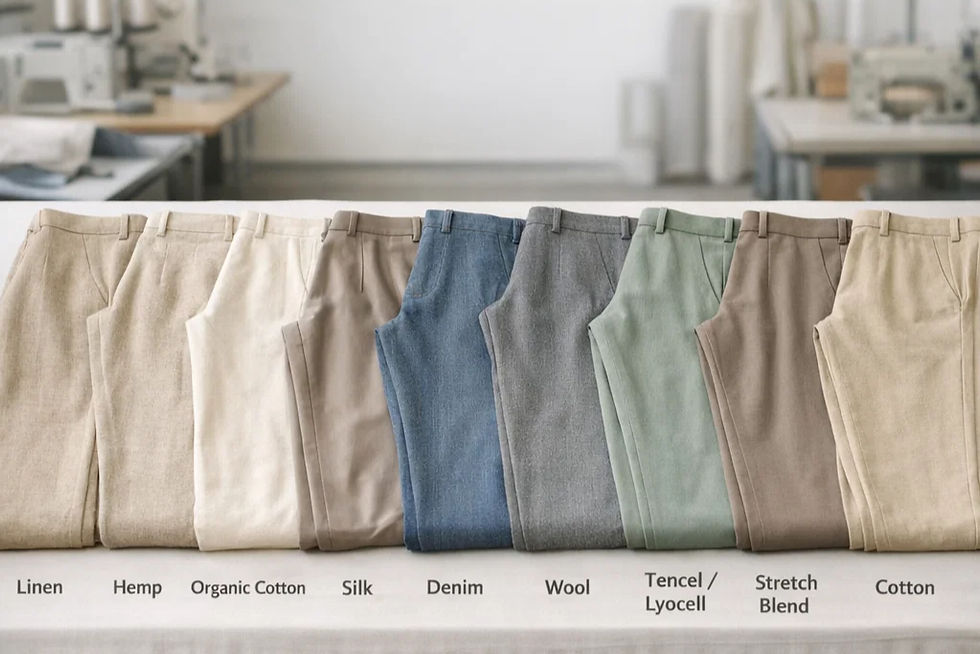
This guide takes you beyond surface-level lists. You will learn what truly makes a fabric good for trousers, how professionals compare different fabric types for pants, and how to avoid the costly mistakes that most brands only notice after launch.
What Makes a Fabric Good for Trousers?
A great trouser fabric does three things at once. It breathes in the right climate, holds its shape through long days of sitting and walking, and ages gracefully through repeated washing. The best material for pants is never chosen because it sounds premium; it is chosen because it behaves well in real life.
Important Characteristics of Good Trouser Fabrics
Breathability: Breathable trousers feel light even in heat. Linen, hemp, and lighter cotton weaves allow air to pass through the yarn structure rather than trapping it at the skin.
Durability: True durability comes from yarn density and weave, not fiber name. A tightly woven cotton twill outperforms a loose luxury weave every time.
Stretch Recovery: Knees that bag out are not a tailoring problem. They are a fabric problem. Elastic recovery is what keeps trousers looking sharp after a full workday.
Shrinkage Control: Shrinkage above three percent almost always leads to customer complaints. Reliable pants fabric types maintain dimensional stability.
Fabric Weights for Sewing Trousers
Fabric weight is measured in GSM and determines drape more than any marketing term.
Trouser Type | Ideal Fabric Weight |
Summer trousers | 120–180 GSM |
Casual chinos | 200–260 GSM |
Formal trousers | 240–300 GSM |
Winter trousers | 280–350 GSM |
How to Choose the Best Fabric for Trousers
Designers who get this right start with climate, then lifestyle, then sustainability. Summer collections thrive on linen and hemp. Office wear leans on cotton twill and organic cotton. Luxury silhouettes need silk or Tencel blends. Utility pants depend on canvas and denim. Every successful collection is built by matching types of pants material to how people actually live.
Top 10 Fabric Types for Trousers (In Depth)
1. Linen Fabric
Linen is produced from flax, a crop that needs little irrigation and thrives without heavy chemicals. The hollow fiber structure allows body heat to escape naturally, which is why linen fabric trousers feel noticeably cooler in tropical climates. High-quality linen softens with every wash while retaining breathability.
Best for: summer trousers, resort wear, relaxed office pants.
2. Cotton Fabric
Plain cotton is comfortable but limited. Cotton twill, with its diagonal weave, transforms the fiber into one of the most versatile pants materials available. It holds dye well, tolerates frequent washing, and adapts easily to different weights.
Best for: chinos, uniforms, daily wear trousers.
3. Denim Fabric
Denim is heavy cotton twill woven tightly for abrasion resistance. It starts rigid but relaxes into a personalized fit over time. This durability explains why denim trousers routinely outlast most other categories.
Best for: jeans, rugged casual trousers.
4. Wool Fabric
Wool fibers have natural crimp that traps air in cold environments and releases heat indoors. This built-in climate control makes wool trousers comfortable across a wide temperature range, not just winter.
Best for: tailored trousers, formal and business wear.
5. Silk Fabric
Silk is a protein fiber with remarkable tensile strength, yet its surface structure gives it fluid drape. This makes silk fabric ideal for wide-leg and palazzo silhouettes where the fabric is free to move rather than rub.
Best for: luxury trousers, lounge collections, fashion pieces.
6. Hemp Fabric
Hemp is one of the most sustainable fibers available. It grows rapidly, improves soil health, and needs very little water. Over time, hemp fabric trousers become softer without losing structural integrity.
Best for: eco-focused collections, durable everyday pants.
7. Tencel / Lyocell Fabric
Made from responsibly sourced wood pulp in closed-loop systems, Tencel fibers feel cooler than cotton and manage moisture exceptionally well. They add luxury feel without sacrificing sustainability.
Best for: travel trousers, premium casual wear.
8. Canvas Fabric
Canvas is dense plain weave built for strength. It is not breathable, but it is extremely resistant to tearing and abrasion.
Best for: utility pants, outdoor and workwear collections.
9. Stretch Blend Fabrics
A small percentage of elastane changes everything. Stretch blends recover shape after movement and allow modern slim silhouettes to remain comfortable.
Best for: performance trousers, fitted designs.
10. Organic Cotton Fabric
Organic cotton avoids synthetic pesticides and protects soil ecosystems. From a design standpoint, it performs just like conventional cotton but aligns better with sustainability values.
Best for: conscious everyday trousers.
Material Performance Comparison
Fabric Type | Breathability | Durability | Water Use | Sustainability | Best Use |
Linen Fabric | Excellent | Medium | Low | High | Summer trousers |
Hemp Fabric | Very High | Very High | Very Low | Very High | Daily wear |
Organic Cotton Fabric | High | High | Medium | High | Chinos |
Silk Fabric | Medium | Medium | Low | Medium | Luxury pants |
Cotton Twill | Medium | High | High | Low | Casual wear |
Denim | Low | Very High | High | Low | Jeans |
Wool / Blends | Medium | High | Medium | Medium | Formal trousers |
Canvas | Low | Very High | High | Low | Utility pants |
Tencel / Blends | High | Medium | Low | High | Travel wear |
Stretch Blends | Medium | High | Medium | Medium | Performance pants |
Conclusion
There is no single answer to the best material for pants. There is only the right fabric for the job, the climate, and the person wearing them. When you understand how different pants fabric types behave, trousers stop being guesswork and start becoming systems that deliver comfort, durability, and value year after year.
If you are looking to source high-quality, sustainable fabrics or need guidance choosing the right pants materials for your next collection, Source Creative is here to help. From organic cotton to innovative hemp and luxury silk, their team works closely with designers and brands to deliver fabrics that perform beautifully in the real world.
Get in touch with Source Creative today to explore their curated fabric range and start building trousers that your customers will actually love to wear.
FAQs
What is the best material for pants?
The best material for pants depends on climate and usage. Linen and hemp work best for hot weather, organic cotton suits everyday wear, and wool or silk blends are ideal for formal trousers.
Are natural fabrics better than synthetic ones for pants?
Natural fabrics like cotton, hemp, linen, and silk allow better airflow and moisture control. Synthetic fabrics often last longer but may feel less breathable.
What fabric is best for summer trousers?
Linen fabric is widely considered the best fabric for summer trousers due to its cooling properties and lightweight feel.
How do I choose fabric for sewing trousers?
Start with the season, then choose the appropriate GSM weight. Lightweight fabrics work for summer pants, while heavier fabrics like wool and canvas suit winter or utility trousers.
What pants fabric does not wrinkle easily?
Wool blends and stretch fabrics resist wrinkles better than linen or pure cotton, making them ideal for travel or long workdays.
What is the softest fabric for trousers?
Tencel and silk fabric are among the softest trouser fabrics. They feel smooth on the skin and offer excellent drape.


Comments