How Global Linen Fabric Suppliers Ensure Consistent Fabric Quality
Published: June 2026 | Last reviewed: June 2026

Fabric quality is not a given — it has to be built into every step of the supply chain. For B2B textile buyers, fashion designers, apparel manufacturers, and sourcing managers, inconsistent quality from linen fabric suppliers can mean rejected shipments, production delays, and damage to brand reputation.
As demand for linen continues to grow across fashion, home textiles, and commercial applications, understanding how global suppliers maintain quality consistency has become essential knowledge for any business that sources natural fabrics at scale. This guide breaks down the key processes, certifications, and practices that reliable linen fabric suppliers use to deliver consistent results — and what to look for when you buy linen fabric for your next production run.
Why Fabric Quality Consistency Matters in Linen Sourcing
Unlike synthetic fabrics, linen is a natural fiber with inherent variability. Flax crops respond to soil conditions, climate, and harvest timing. This means that without rigorous quality management across the supply chain, batch-to-batch variation is a real and common problem.
Consider a scenario many sourcing managers have experienced: a home textile brand approves a linen sample at 180 GSM, places a bulk order, and receives a second batch at 155 GSM — well below the approved spec. The result is a delayed production run, renegotiated pricing, and a strained supplier relationship. This kind of inconsistency is avoidable, but only when buyers know what quality controls to look for before signing off on a supplier.
For brands sourcing wholesale linen fabric, even minor inconsistencies in:
Fabric weight (GSM)
Color tone
Weave density
Shrinkage behavior
Surface texture
...can disrupt production schedules, increase waste, and create customer complaints.
Reliable wholesale linen suppliers address this through a combination of raw material controls, production standards, testing protocols, and certifications. Understanding each of these gives buyers a clearer picture of what separates dependable suppliers from those who deliver inconsistencies.
The Role of Raw Material Sourcing in Quality Control
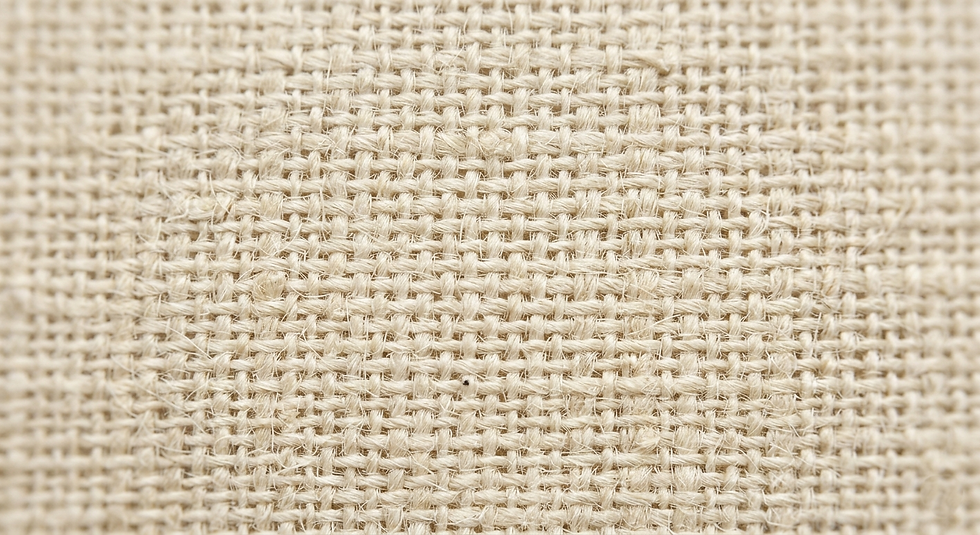
Consistent fabric quality begins before a single thread is woven. The quality of flax fiber — the raw material for linen — varies significantly by origin, growing conditions, and processing method.
Western Europe, particularly France, Belgium, and the Netherlands, accounts for a significant share of global premium flax production. The Alliance for European Flax-Linen & Hemp, the leading European agro-industrial organization for the sector, maintains traceability certifications (Masters of FLAX FIBRE™ and Masters of Linen®) that verify fiber origin and production standards from field to fabric.
Suppliers who source certified raw materials are better positioned to deliver consistent fabric because:
Fiber length, strength, and uniformity are controlled at the farm level
Processing methods are standardized across the supply chain
Independent third-party verification reduces the risk of substitution or dilution
When evaluating wholesale linen suppliers, asking about fiber origin and raw material traceability is one of the most direct indicators of long-term quality consistency.
Key Industry Certifications That Signal Quality Standards

Certifications are not just marketing tools — they represent third-party verification that a supplier meets defined standards at specific points in the production process.
The three most widely recognized certifications for linen fabric suppliers, and what each one actually covers:
Certification | What It Covers | Best For |
OEKO-TEX® Standard 100 | Tests finished textiles against 1,000+ harmful substances including formaldehyde, heavy metals, pesticides, and azo dyes. Every component — dyes, finishes, threads — must pass. Requires annual renewal. | Buyers in EU/North America; skin-contact and children's products |
GOTS (Global Organic Textile Standard) | Covers the entire supply chain from fiber to finished product, including social compliance, chemical management, and environmental criteria. Requires minimum 70% organic fiber content. | Buyers who need organic certification and full supply chain traceability |
Masters of Linen® / Masters of FLAX FIBRE™ | Verifies European-origin flax traceability from farm to fabric, administered by the Alliance for European Flax-Linen & Hemp. Provides proof of fiber origin and production standards. | Buyers sourcing premium European linen with verified provenance |
Retail buyers are increasingly making certification a pre-qualification requirement. According to industry data, consumers in 2024 were 60% more likely to purchase from brands that provide transparent third-party verification of their material safety claims — which in turn has driven B2B buyers to require certified suppliers as a baseline, not an exception.
GOTS Version 8.0, effective March 2027, further strengthens supply chain accountability with mandatory due diligence, enhanced chemical and climate criteria, and new circularity requirements. Suppliers not adapting to these requirements risk losing access to premium market segments that reference GOTS compliance in their buying criteria.
For a direct link to certification bodies, the OEKO-TEX® official website and global-standard.org both maintain up-to-date certification directories buyers can use to verify supplier status.
Production-Level Quality Control Processes

Beyond raw material sourcing, consistent quality depends on what happens on the factory floor. Established linen fabric suppliers use a combination of in-process checks and final inspection protocols to minimize defects before fabric reaches the buyer.
Yarn and Weave Consistency Checks
Linen yarn is tested for:
Tensile strength and twist consistency
Linear density (count and weight per unit length)
Uniformity and defect rate
Weave consistency is monitored to ensure thread count, weave pattern, and fabric width remain stable across the full production run — not just the approved sample. These checks are most critical for buyers placing repeat orders across multiple seasons, where each batch needs to match the last.
Dyeing and Finishing Controls
Color consistency is one of the most common quality complaints in wholesale linen fabric orders. Reputable suppliers use:
Standardized dye recipes with controlled bath ratios
Spectrophotometer testing to verify color accuracy against approved swatches
Batch records that allow traceability if a color deviation occurs
Finishing processes — such as enzyme washing, pre-washing, or softening — are applied under controlled conditions to ensure consistent hand feel and shrinkage behavior across batches. The dyeing and finishing stage accounts for approximately 80% of the total chemical impact in textile production, which is why certifications that govern this stage, such as OEKO-TEX® Standard 100, are particularly meaningful.
GSM and Dimensional Stability Testing
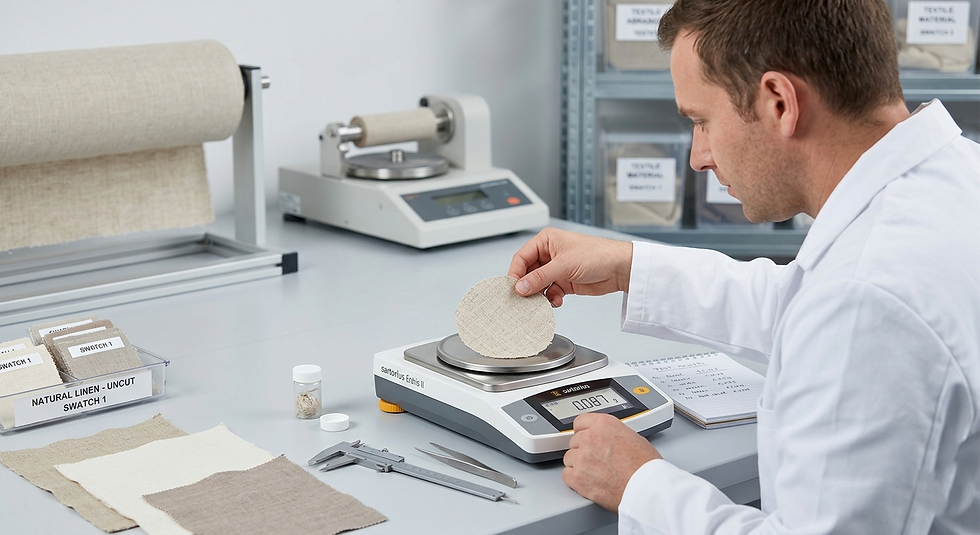
Fabric weight (grams per square meter) is tested at multiple points during production. Variations in GSM affect the drape, durability, and end-use suitability of the fabric. Reliable suppliers test and document GSM for every production lot.
Dimensional stability testing — including shrinkage after washing — is also performed to confirm that the fabric behaves predictably during garment construction and end-use.
Third-Party Inspection and Pre-Shipment Testing
Many global linen fabric suppliers work with independent third-party inspection agencies to verify quality before shipment. This adds an objective layer of quality assurance beyond in-house checks.
Pre-shipment inspection typically covers:
Fabric weight and width verification
Color consistency against approved standard
Defect rate per hundred meters
Shrinkage test results
Packaging and labeling accuracy
For buyers purchasing wholesale linen fabric across international supply chains, pre-shipment inspection reports are a practical tool for managing quality risk without needing to be physically present at the factory. For new supplier relationships especially, this step is worth including in the sourcing contract before the first bulk order is confirmed.
Communication, Documentation, and Traceability
Quality consistency is not only a technical matter — it also depends on how well a supplier documents and communicates across the production process.
Suppliers who maintain clear quality records provide:
Lot-specific test reports for each order
Approved sample records tied to production batches
Clear communication about any deviations before shipment
Fabric care and composition documentation for compliance requirements
Transparent documentation allows buyers to trace quality issues back to their source, resolve disputes efficiently, and build more reliable procurement processes over time. GOTS, for example, requires Transaction Certificates (TCs) at every stage of the certified supply chain — a model that shows what full traceability looks like in practice and sets a useful benchmark even for non-organic sourcing relationships.
What B2B Buyers Should Evaluate Before Sourcing
Before you buy linen fabric in bulk, use the following criteria to assess a supplier's quality management capability:
Certification status — Verify current OEKO-TEX®, GOTS, or equivalent certifications directly through the certification body's online database
Fiber origin — Ask about flax sourcing and whether traceability certifications apply
Quality control documentation — Request sample test reports from recent production lots
Inspection process — Confirm whether third-party pre-shipment inspection is available
Sample testing policy — Ensure you can test production samples for GSM, shrinkage, and color before full order confirmation
Communication standards — Assess how deviations and issues are handled and documented
These steps reduce the risk of quality surprises and help establish a clear baseline for what to expect from an ongoing supply relationship with wholesale linen suppliers.
Industry Trends Shaping Linen Quality Standards
The bar for quality assurance in linen fabric sourcing continues to rise. Several trends are directly influencing how global suppliers manage and demonstrate quality:
Stricter ESG and Compliance Requirements Brands are now required to demonstrate supply chain transparency as part of ESG reporting. This is pushing linen fabric suppliers to invest in stronger traceability systems and third-party audits. The EU Corporate Sustainability Due Diligence Directive (CSDDD) is accelerating this shift for brands selling into European markets.
Growing Certification Expectations Consumer demand for verified sustainable textiles is growing. Certifications have moved from being a differentiator to a commercial baseline — particularly in EU and North American retail channels, where many retailers now require certification before onboarding new brands.
GOTS Version 8.0 and New Circularity Requirements As noted above, GOTS Version 8.0 (effective March 2027) introduces circularity requirements, microfibre controls, and expanded durability testing. With 17,800 GOTS-certified facilities worldwide as of 2025, this update affects a significant portion of the global textile supply chain and raises the minimum standard for what "certified" means going forward.
Conclusion
For businesses sourcing linen at scale, fabric quality consistency is not something that happens automatically — it is the result of deliberate supplier systems, verifiable certifications, in-process controls, and transparent communication.
Understanding how global linen fabric suppliers manage quality gives buyers the knowledge to ask better questions, evaluate suppliers more accurately, and build more stable supply relationships over time.
At Source Creative, we work with businesses sourcing premium linen fabrics for fashion, home textiles, and commercial applications. Our sourcing process is built around quality consistency, verified materials, and clear communication at every stage.
Explore our linen fabric range or contact our team to discuss your sourcing requirements.
About Source Creative
Source Creative is a linen fabric sourcing company based in India, working with B2B buyers across fashion, home textiles, and commercial applications. We help brands and manufacturers source premium linen fabrics with consistent quality, verified materials, and clear documentation at every stage of the supply relationship.
Frequently Asked Questions
Q1. How do linen fabric suppliers maintain color consistency across large production batches?
Reliable suppliers use spectrophotometer testing to measure color accuracy against an approved standard swatch. Dye bath formulas are recorded and repeated precisely for each production run. Batch records allow any color deviation to be traced and addressed before shipment.
Q2. What certifications should I look for when sourcing wholesale linen fabric?
The three most widely recognized certifications are OEKO-TEX® Standard 100 (tests finished fabric against 1,000+ harmful substances), GOTS (organic fiber and full supply chain compliance), and Masters of Linen® (European traceability). OEKO-TEX is a practical baseline for most B2B sourcing decisions; GOTS is required if your buyers or end market specify organic certification.
Q3. Why does linen fabric weight (GSM) vary between suppliers, and how can buyers manage this?
GSM variation can result from differences in yarn count, weave density, and finishing processes. To manage this, always request a technical data sheet specifying GSM alongside your sample. Confirm that production batches are tested against the same GSM target before shipment, and include the approved GSM tolerance range in your purchase order.
Q4. Is third-party fabric inspection necessary when buying linen fabric from international suppliers?
For large orders or new supplier relationships, third-party pre-shipment inspection significantly reduces the risk of receiving fabric that deviates from approved standards. It provides an independent, documented verification of weight, color, defect rate, and packaging before goods leave the factory — and is worth including as a standard term in your sourcing contract.
Q5. How does fiber origin affect the consistency of wholesale linen fabric quality?
Flax fiber quality varies by geography, climate, and cultivation practices. Suppliers sourcing from regions with established traceability certifications — such as European-origin flax certified under the Masters of FLAX FIBRE™ standard — offer greater raw material consistency compared to suppliers with unverified or mixed-origin fiber sourcing.


Comments