Linen or Cotton: Which Fabric Helps UK Fashion Brands Protect Margins Without Compromising Quality?

The UK fashion industry is facing increasing pressure from rising production costs, evolving sustainability regulations, and consumers who expect better quality garments that last longer. For brands trying to maintain profitability, fabric selection has become more than a design decision—it is a business strategy.
Among natural fibres, linen and cotton remain two of the most widely used materials. Both offer comfort, versatility, and strong consumer appeal, but they differ significantly in cost, durability, sourcing, and long-term value.
For fashion brands, designers, and B2B textile buyers, understanding these differences can help improve margins without sacrificing product quality. This guide explores how linen fabric and cotton compare, what current market trends reveal, and how buyers can make informed sourcing decisions.
Why Fabric Choice Matters More Than Ever for UK Fashion Brands
Fashion businesses in the UK are navigating several challenges simultaneously:
Increasing raw material costs
Demand for transparency and traceability
Consumer preference for durable clothing
Pressure to meet sustainability commitments
Supply chain disruptions
At the same time, UK shoppers are becoming more selective. Research indicates that 73% of UK consumers intend to invest in higher-quality and longer-lasting clothing, while nearly half are willing to pay more for natural fibres.
For brands, this shift creates an opportunity to move beyond competing solely on price and instead focus on delivering better value.
Understanding Linen and Cotton
What is Linen Fabric?
Linen is produced from flax fibres and is known for its breathability, strength, and distinctive texture. It has been used for centuries in apparel, home textiles, and luxury fashion.
Key characteristics include:
High durability
Moisture-wicking properties
Natural temperature regulation
Low environmental impact
A premium appearance
Many brands choose to buy linen fabric for summer collections, resort wear, and premium lifestyle products.
What Makes Cotton Popular?
Cotton remains one of the most versatile textile fibres globally.
Its advantages include:
Soft texture
Ease of dyeing
Wide availability
Lower upfront costs
Compatibility with numerous garment categories
Cotton works particularly well for basics, childrenswear, loungewear, and casual apparel. Brands sourcing premium options can also explore organic cotton fabric for collections that require both softness and responsible sourcing credentials.
Comparing Linen and Cotton for Margin Protection
1. Raw Material Costs
At first glance, cotton often appears to be the more affordable option.
However, initial purchase price only tells part of the story.
Linen generally costs more because flax cultivation is concentrated in limited regions, mainly France, Belgium, and the Netherlands. Production volumes are smaller, and processing is more labour-intensive.
Yet many brands find that linen's durability offsets its higher acquisition cost.
Cotton Advantages
Lower entry price
Stable supply chains
Suitable for high-volume production
Linen Advantages
Premium retail positioning
Higher perceived customer value
Better cost-per-wear performance
Brands targeting the premium market often recover linen's additional cost through stronger retail pricing.
2. Durability and Product Lifespan
Durability directly impacts brand reputation.
Consumers increasingly expect clothing to retain its appearance after repeated washing and wear.
Linen fibres are naturally stronger than cotton fibres. With proper care, linen garments soften over time while maintaining structural integrity.
Cotton offers comfort but may experience pilling, shrinkage, or fibre weakening depending on quality grades.
For businesses aiming to reduce returns and improve customer satisfaction, linen presents several advantages.
Linen performs well for:
Overshirts
Dresses
Trousers
Lightweight jackets
Home textiles
Cotton performs well for:
T-shirts
Sweatshirts
Childrenswear
Sleepwear
Sustainability Considerations for UK Brands
Environmental performance has become an important purchasing factor.
Research from Drapers found that 83% of consumers now consider sustainability when buying fashion products.
Why Linen Appeals to Sustainability-Focused Buyers
Flax cultivation typically requires less irrigation and fewer pesticides compared with conventional cotton production.
Benefits include:
Reduced water consumption
Minimal chemical inputs
Biodegradable fibres
Long product lifespan
Industry analysis suggests linen can offer a significantly lower environmental footprint than many conventional fibres.
Cotton's Sustainability Progress
Cotton should not automatically be considered unsustainable.
Brands sourcing organic or certified cotton can still meet responsible sourcing goals.
Certifications worth considering include:
GOTS
OEKO-TEX
Organic Content Standard
Better Cotton Initiative
Cotton also benefits from a well-established certification ecosystem, making verification relatively straightforward.
Industry Trends Influencing Fabric Selection
Consumers Want Better Quality
A growing number of UK consumers prefer purchasing fewer garments that last longer.
Studies show:
73% plan to buy higher-quality fashion items
49% are willing to spend more on natural fibres
25% actively seek products with lower environmental impact
These findings indicate a movement toward investment dressing rather than fast-fashion purchasing habits.
Transparency is Becoming Essential
Buyers increasingly request information about:
Fibre origin
Manufacturing locations
Environmental claims
Certifications
Brands that communicate sourcing practices clearly are more likely to gain customer trust.
How UK Fashion Brands Can Decide
Between Linen and Cotton
There is no universal answer.
The best option depends on your business objectives.
Choose Linen If You Want To:
✔ Position products as premium offerings
✔ Improve garment longevity
✔ Support sustainability messaging
✔ Appeal to customers seeking breathable summer fabrics
✔ Increase average selling prices
Many businesses looking for wholesale linen fabric appreciate its ability to elevate capsule collections and luxury ranges.
Choose Cotton If You Want To:
✔ Control production costs
✔ Launch high-volume collections
✔ Offer soft everyday essentials
✔ Access a broad supplier network
✔ Maintain competitive retail pricing
Consider Linen-Cotton Blends
Blended fabrics can provide a balance between cost efficiency and performance.
Benefits include:
Improved wrinkle resistance
Softer hand feel
Lower material costs
Greater versatility
For brands experimenting with premium basics, blends can offer a practical starting point.
Practical Tips for Sourcing Linen Successfully
Finding reliable suppliers remains one of the biggest challenges for apparel businesses.
When evaluating wholesale linen suppliers, ask these questions:
1. Can They Provide Certifications?
Look for documentation related to:
OEKO-TEX
European Flax
Masters of Linen
GOTS
2. What Are Their Minimum Order Quantities?
Flexible MOQs allow brands to test new collections without overcommitting inventory.
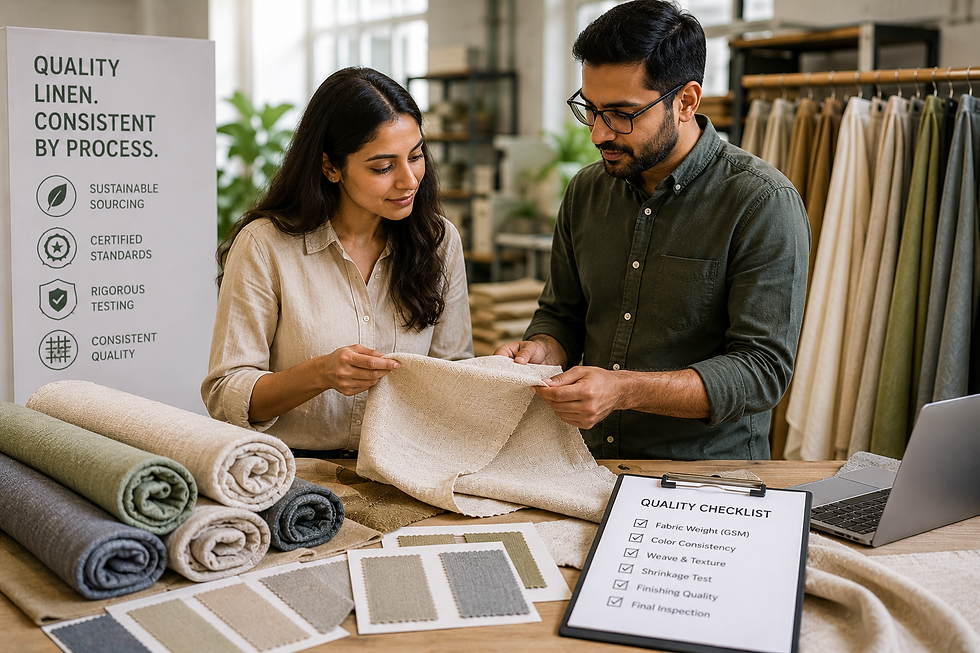
3. Is Fabric Consistency Guaranteed?
Request swatches from multiple production batches.
Check:
Colour variation
Fabric weight
Shrinkage rates
Weaving quality
4. How Responsive Is Their Team?
Fast communication often reflects a supplier's operational reliability.
For additional guidance on sustainable textile sourcing, readers can explore resources from the Textile Exchange.
Final Thoughts
Choosing between linen and cotton is not simply about selecting the cheaper material. It is about understanding how fabric decisions affect margins, customer perception, sustainability objectives, and long-term brand growth.
Cotton remains an excellent solution for high-volume basics and everyday essentials. Linen, meanwhile, offers advantages in durability, premium positioning, and environmental performance. For many UK fashion businesses, incorporating linen strategically can help increase perceived value while supporting a more resilient business model.
As consumer expectations continue to evolve, selecting the right textile partner becomes increasingly important. Source creative works with brands seeking dependable fabric solutions and quality materials tailored to modern fashion requirements. Explore our collection and get in touch to discuss the right fabric options for your next collection.
Frequently Asked Questions
1. Is linen more expensive than cotton for fashion brands?
Yes, linen generally has a higher upfront cost, but its durability and premium appeal can help brands achieve better long-term returns.
2. Why do UK fashion brands use linen fabric?
Many UK brands use linen because it offers breathability, durability, and aligns with growing consumer interest in sustainable fashion.
3. Where can businesses buy linen fabric in bulk?
Brands can purchase linen through specialized textile manufacturers and trusted wholesale suppliers that offer certifications and consistent quality.
4. Are linen-cotton blends a good option for apparel brands?
Yes. Linen-cotton blends combine the softness of cotton with the strength and texture of linen, making them suitable for many garment categories.
5. What should buyers look for when choosing wholesale linen suppliers?
Buyers should evaluate certifications, minimum order quantities, quality consistency, lead times, and supplier communication before placing bulk orders.

Comments