What We Learned Sourcing Linen from Multiple Wholesale Suppliers for Fashion Brands: A Practical Procurement Framework

Sourcing wholesale linen in bulk is one of the most important decisions a fashion business makes. Get it right, and you build a reliable supply chain with consistent quality, fair pricing, and on-time delivery. Get it wrong, and you risk delayed collections, inconsistent fabric batches, and unhappy customers.
This is especially true when you buy linen fabric. Linen is prized for its breathability, durability, and natural texture, but its quality can vary widely between mills, regions, and even production runs. For B2B textile buyers, fashion designers, and procurement managers, a structured approach to wholesale linen sourcing isn't optional — it's the foundation of a dependable product line.
This guide walks you through a practical, step-by-step checklist for wholesale linen procurement, so you can buy linens in bulk with confidence and build lasting relationships with the right linen suppliers.
Why Wholesale Linen Sourcing Matters for Fashion Businesses
Linen has moved well beyond its seasonal "summer fabric" reputation. Designers now use it year-round for shirting, dresses, loungewear, and home textiles, which means procurement teams are placing larger and more frequent bulk orders than ever before.
But linen is a natural fibre, and natural fibres come with natural variation. Two batches from the same wholesale linen fabric supplier can differ slightly in weight, weave tension, or finish. Without a clear procurement process, these small variations can turn into costly production delays, fit inconsistencies, or quality complaints from retail partners.
A documented checklist protects your business in three ways:
It keeps every order consistent, even when you're working with multiple linen fabric suppliers.
It reduces the back-and-forth that slows down production timelines.
It gives your team a shared reference point, so sourcing decisions don't rely on memory or guesswork.
Industry Trends Fashion Buyers Should Know
Before diving into the checklist, it helps to understand where the wholesale linen market is heading.
Sustainability is now a sourcing requirement, not a marketing add-on. Flax, the plant linen is made from, needs very little water compared to cotton — a single linen shirt typically requires only a small fraction of the water a cotton shirt does over its lifecycle, since flax is largely rain-fed rather than irrigated. Buyers are increasingly expected to show where their flax comes from, not just what the finished fabric feels like. Certifications such as European Flax and OEKO-TEX are becoming standard requirements in supplier vetting, particularly for brands selling into European and North American markets.
GSM (grams per square metre) is the buyer's shorthand for fit-for-purpose fabric. Lightweight linen generally falls in the 100–150 GSM range and suits drapey shirts and summer dresses, while heavier linen in the 200–400+ GSM range is better suited to structured jackets, trousers, and upholstery-grade applications. Knowing your target GSM before you contact suppliers saves time on both sides.
Mills are consolidating, and traceability is improving. Many established linen suppliers now offer batch-level documentation, lab dip records, and shrinkage data as standard, which makes it easier for fashion buyers to compare offers on a like-for-like basis rather than relying on swatch impressions alone.
The Wholesale Linen Procurement Checklist
Use the following steps as a working checklist each time you evaluate or onboard a new supplier.
1. Define Your Fabric Specifications First
Before reaching out to any wholesale linen suppliers, write down exactly what you need:
Target GSM range and tolerance
Weave type (plain, twill, basket, etc.)
Fabric width
Colour and dyeing requirements (yarn-dyed, piece-dyed, or undyed)
Finish (washed, stone-washed, enzyme-washed, or raw)
Clear specifications prevent miscommunication and make supplier quotes genuinely comparable.
2. Vet Your Wholesale Linen Suppliers
Not every supplier offering wholesale linen fabric is the right fit for your brand. Check:
Years in operation and client portfolio, ideally including other fashion brands
Manufacturing capacity versus your order volume
Whether they own the mill or act as a trading intermediary
References or verifiable trade history
A short supplier questionnaire at this stage saves weeks of frustration later.
3. Request and Test Physical Samples
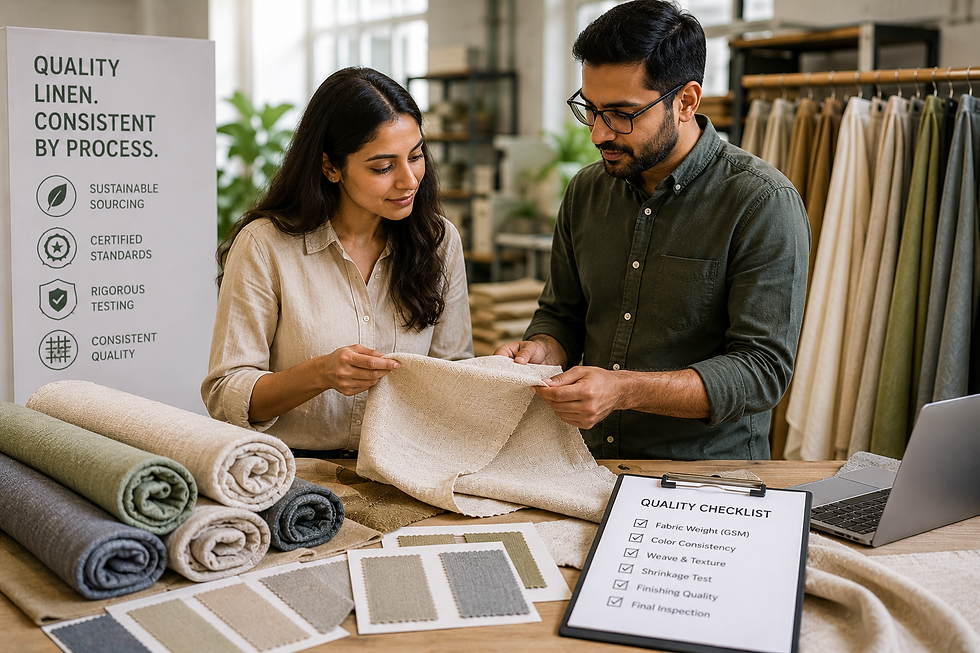
Specification sheets and photos are useful, but they can't replace a physical swatch. Always request samples before placing a bulk order, and test for:
Hand feel and drape
Colour accuracy against your pantone or swatch reference
Shrinkage after a standard wash cycle
Opacity and weight consistency across the swatch
If a supplier hesitates to provide samples, treat that as a warning sign.
4. Confirm Certifications and Sustainability Credentials
Ask for documentation, not just claims. Reputable linen fabric suppliers should be able to provide certificates for fibre origin, chemical safety (such as OEKO-TEX Standard 100), and, where relevant, organic or European Flax certification. Keep copies on file, since retail partners and auditors increasingly request this paperwork.
5. Clarify MOQs, Lead Times, and Pricing Structure
Before you commit, get clear written answers on:
Minimum order quantity (MOQ) per colour and per fabric type
Production lead time versus shipping lead time
Price breaks at higher volumes
Whether pricing is FOB, CIF, or ex-works
Buying linens in bulk only makes financial sense if the supplier's MOQs and pricing tiers actually match your order patterns.
6. Review Quality Control Processes
Ask each supplier to describe their quality control checkpoints — inline inspection during weaving, finishing checks, and pre-shipment inspection. Request a recent inspection report if possible. This step matters most for first-time orders, where you have no production history with the supplier to fall back on.
7. Plan Logistics and Payment Terms
Finally, confirm shipping methods, packaging standards (rolls versus folded, moisture protection), and payment terms (deposit percentage, balance terms, accepted currencies). Building this into your checklist avoids last-minute surprises that can delay your cutting room schedule.
Benefits of a Structured Procurement Process
Fashion businesses that follow a documented checklist when they buy linen fabric in bulk typically see:
Fewer production delays, since specifications and lead times are confirmed upfront
More consistent fabric quality across repeat orders, even when scaling production
Stronger supplier relationships, built on clear expectations rather than assumptions
Better cost control, because pricing and MOQs are compared on equal terms
Easier compliance reporting, with certification documents already on file
Final Thoughts
Wholesale linen procurement doesn't have to be complicated, but it does need structure. A clear specification, a vetted supplier list, sample testing, and confirmed terms on MOQs and logistics will save your team time and protect your brand's quality standards order after order.
At Source Creative, we work directly with fashion businesses that need dependable, ethically sourced linen at scale. Discover our collection of premium linen fabrics at Source Creative and reach out through our Contact Us page to find the right material for your next collection.
Frequently Asked Questions
1. What GSM should I choose for wholesale linen shirting?
Most lightweight shirting falls between 100 and 150 GSM. This range offers good breathability and drape while still holding its shape well enough for tailored shirt construction.
2. How do I know if a wholesale linen supplier is reliable?
Look for verifiable trade history, willingness to provide physical samples, transparent certification documents, and clear answers about MOQs and lead times. Suppliers who avoid these questions are a risk signal.
3. What's a typical minimum order quantity when I buy linens in bulk?
MOQs vary by supplier and fabric type, but many mills set minimums per colourway rather than per overall order. Always confirm this in writing before finalising specifications.
4. Why does linen fabric vary between batches from the same supplier?
Linen is a natural fibre, so small variations in weave tension, dye uptake, or finishing can occur between production runs. Requesting batch-level lab dips and pre-shipment samples helps you catch variation before it reaches your cutting room.
5. Is certified European Flax linen worth paying more for?
For brands marketing sustainability credentials to customers or retail partners, certified flax provides documented proof of low-water, low-input cultivation, which is increasingly expected in compliance and retail audits.

Comments