Key Questions to Ask Linen Fabric Suppliers Before Placing an Order

Linen has long been valued in the textile industry for its durability, breathability, and natural appeal. From fashion garments to home décor, linen fabric is widely used by designers, manufacturers, and retailers seeking quality and sustainability. However, choosing the right linen fabric suppliers is critical to ensuring consistent product quality, reliable delivery, and long-term business success.
This blog outlines the key questions businesses should ask linen fabric suppliers before committing to a purchase. By understanding supplier capabilities, quality standards, pricing structures, and logistics, buyers can make informed decisions when they buy linen fabric or source wholesale linen fabric for their operations.
Why Choosing the Right Linen Fabric Supplier Matters
Quality Impacts Product Performance
The quality of linen fabric directly affects the durability, comfort, and appearance of the final product. Poor-quality linen can lead to:
Fabric shrinkage or deformation
Weak fibers and reduced durability
Uneven textures or inconsistent dyeing
Selecting reliable linen fabric suppliers ensures consistent raw material quality and helps maintain brand reputation.
Supply Chain Reliability
For fashion brands and textile businesses, supply delays can disrupt production schedules and affect customer commitments. Trusted wholesale linen suppliers offer stable supply chains and dependable delivery timelines.
Cost Efficiency
A strong supplier partnership allows businesses to obtain competitive pricing when purchasing wholesale linen fabric while maintaining quality standards.
Industry Trends in Linen Fabric Sourcing
The demand for linen fabrics continues to grow globally as sustainability and natural fibers gain popularity in the textile industry.
According to Textile Exchange, natural fibers such as linen are increasingly preferred due to their lower environmental impact compared to synthetic materials.
Several industry trends are influencing how businesses source linen fabrics:
1. Growing Demand for Sustainable Materials
Linen is derived from flax fibers, which require less water and fewer pesticides compared to other crops. This makes linen an attractive choice for brands focusing on sustainable textiles.
2. Increase in Wholesale Fabric Procurement
Many apparel manufacturers and retailers now prefer buying wholesale linen fabric to reduce costs and ensure bulk availability.
3. Customization and Fabric Innovation
Modern linen suppliers offer:
Blended linen fabrics
Pre-washed linen
Custom dyeing and finishing
These innovations allow businesses to create unique textile products.
Key Questions to Ask Linen Fabric Suppliers
Before finalizing an order, businesses should evaluate suppliers by asking several essential questions.
1. What Is the Origin and Quality of the Linen Fabric?
Understanding where the linen is sourced from is important for quality assurance.
Ask suppliers about:
The origin of the flax fibers
Fabric composition and thread count
Manufacturing standards
High-quality linen typically comes from regions known for flax production, including parts of Europe and Asia.
2. Do You Offer Fabric Samples Before Bulk Orders?
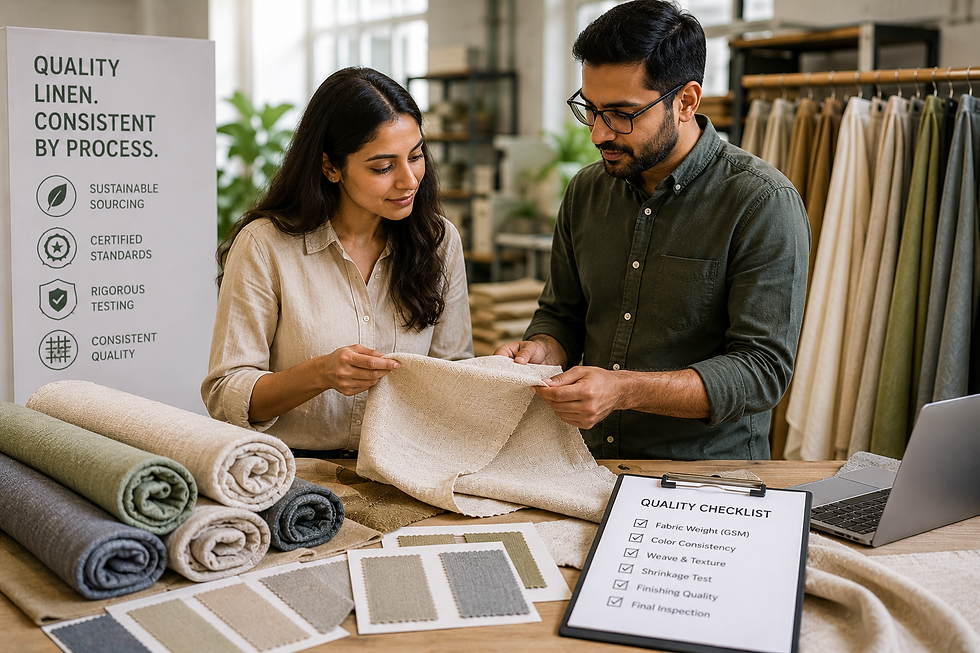
Reliable linen fabric suppliers usually provide fabric samples before confirming a wholesale order.
Sampling helps buyers evaluate:
Texture and softness
Fabric weight and thickness
Color accuracy
Durability
This step reduces the risk of receiving unsuitable materials in large quantities.
3. What Minimum Order Quantities (MOQ) Apply?
Minimum order quantities vary between suppliers. Some wholesale linen suppliers may require larger bulk purchases, while others offer flexible MOQs.
Businesses should ask:
What is the minimum quantity required for wholesale orders?
Are smaller trial orders available?
This helps new brands test materials before committing to large-scale procurement.
4. What Certifications and Quality Standards Do You Follow?
Quality certifications ensure the fabric meets international standards for safety and sustainability.
Some commonly recognized certifications include:
OEKO-TEX Standard 100
Global Organic Textile Standard (GOTS)
You can learn more about textile certifications from the OEKO-TEX official website:https://www.oeko-tex.com
Choosing certified suppliers ensures compliance with environmental and safety requirements.
5. What Are the Pricing Structures for Wholesale Linen Fabric?
Understanding pricing models is essential when businesses plan to buy linen fabric in bulk.
Ask suppliers about:
Price per meter or yard
Discounts for large orders
Additional costs such as packaging or shipping
Transparent pricing helps businesses forecast production costs accurately.
6. What Customization Options Are Available?
Many manufacturers require specific fabric characteristics for their designs.
Ask suppliers whether they offer:
Custom colors or dyeing
Different fabric weights
Special finishes or treatments
Customization enables businesses to create unique textile collections.
7. What Are the Delivery Timelines and Logistics Options?
Shipping timelines affect production schedules and inventory planning.
Important questions include:
How long does production take?
What shipping methods are available?
Do you support international delivery?
Reliable wholesale linen suppliers typically provide clear logistics plans and tracking options.
Practical Tips When Buying Linen Fabric
To ensure a successful sourcing process, businesses should follow these best practices.
Verify Supplier Reputation
Research the supplier’s track record before placing an order.
Consider:
Customer reviews
Industry experience
Previous client references
Evaluate Fabric Specifications
Ensure the fabric meets the required specifications for your products.
Important specifications include:
GSM (grams per square meter)
Fiber composition
Weave structure
Test Fabric Durability
Before committing to large orders, test samples for:
Wash resistance
Shrinkage
Colorfastness
This step ensures the linen fabric performs well during manufacturing and consumer use.
Compare Multiple Suppliers
Working with multiple linen fabric suppliers helps businesses compare pricing, quality, and delivery capabilities before making a final decision.
Benefits for Textile Buyers and Fashion Businesses
Partnering with reliable wholesale linen suppliers provides several advantages.
Consistent Fabric Quality
Trusted suppliers maintain consistent production standards, ensuring every batch meets expectations.
Competitive Pricing
Buying wholesale linen fabric allows businesses to reduce per-unit costs and increase profit margins.
Reliable Supply Chain
Established suppliers provide predictable delivery schedules, which helps businesses maintain efficient production timelines.
Product Differentiation
High-quality linen fabrics allow brands to create premium products that stand out in competitive markets.
Closing Thoughts
Sourcing linen fabrics is a critical step for businesses involved in fashion design, textile manufacturing, and retail. Asking the right questions before placing an order helps buyers evaluate supplier reliability, product quality, and pricing transparency.
By carefully assessing linen fabric suppliers, businesses can build long-term partnerships that support consistent production and sustainable growth. Understanding supplier capabilities, certifications, and logistics ensures that companies make confident decisions when they buy linen fabric or source wholesale linen fabric.
Discover our range of quality textile solutions at Source Creative and reach out through our Contact Us to find the right fabric for your next collection or textile project.
1. How do I choose reliable linen fabric suppliers?
Look for suppliers with strong industry experience, positive customer reviews, quality certifications, and the ability to provide fabric samples before bulk orders.
2. What should I check before buying linen fabric in bulk?
You should evaluate fabric quality, certifications, minimum order quantities, pricing, and delivery timelines before purchasing wholesale linen fabric.
3. Is wholesale linen fabric cheaper than retail fabric?
Yes. Buying wholesale linen fabric usually offers lower prices per unit, especially for large-scale production or manufacturing businesses.
4. Why are certifications important when sourcing linen fabric?
Certifications such as OEKO-TEX ensure the fabric meets safety and environmental standards, which is important for quality assurance and regulatory compliance.
5. Can linen fabric suppliers provide customized fabrics?
Many suppliers offer customization options such as color dyeing, fabric weights, and special finishes to meet specific product requirements.


Comments